Over the course of my life, I have had a lot of time to think as well as listen to music. Most days I have my iPod on shuffle. It flips through my entire musical collection offering the most eclectic sound a person could imagine. Since Valeria left, I have ventured away from KQQL (KOOL 108) to listen to other radio stations. Most of the hip hop on the radio is nauseating in the sense that if you casually listen for an hour, you may believe that the song never changed. Everything sounds the same these days. It didn't always, that is a fact I know. Although, still today I find some songs that I enjoy. I even find songs that can inspire me. But, for the most part, they have become fewer and farther between.
I want to know how to make beats. I have millions of cool ideas in my head. Of course everyone says that though. Still some days, when I am feeling a little bullet proof, I even imagine so much as fine-tuning the category of Midwest Hip Hop. There is East Coast, West Coast and Dirty South. Each of which have a distinctness to them. But what about Midwest? What about Twin Cities Hip Hop? It exists and thrives, but what the distinct features of it. Selfishly, how can we make Twin Cities Hip Hop distinct from the rest of the Midwest? In my quest to identify the distinctions that make the Minnesota sound unique from the rest of the Hip Hop scene, I suppose I will start with something very near to my heart: Whyte Chokolate.
* * * * *
For all of those who do not know, this was the beginning of our recording career. During a Saturday afternoon in Hutchinson for Camp Meeting, Brandon and I escaped over to the house of Chris Emerson (aka Gician) for an improv recording session. Brandon and Chris jumped straight into the rhymes. This caused me anxiety and a bilious tightness. My flows were weak because I was too overly concerned about saying something of value, something profound. Throughout the session, however, I think we all became more relaxed around the mic and our true personalities began to shine through. The result will eternally be remembered as "Sally Struthers":
Sally Struthers (feat. Gician) by xavyer
Life seemed to take us all in different directions. Brandon headed down to Berrien Springs to continue college at Andrews University. Chris finished up high school at Maplewood Academy before leaving Minnesota to study in Tennessee. As for myself, college in Nebraska wasn't working and life was changing. In January 2008, I moved to Ukraine to teach English in Kiev with Nat Beedle. On the eve of my birthday that year we were walking around the center of Kiev talking about music. When we went back to our flat in Akademistetchko, the very western limits of Kiev, we recorded this little jam. I sent it out to Brandon, but never got a reply on it. It is still something that I would love to finish, whether alone or with Brandon and Chris:
Akademistetchko by xavyer
After living in Ukraine for several months, spring and summer were finally coming into season. Gician had a few songs up on the Internet that I took interest in. You see, Chris has always had a great amount of motivation and work ethic. He finds beats that he likes and records rhymes to them with little to no hesitation. This admirable attribute has been the driving force behind my quest for trying to write more rhymes. When I heard this, I was in a rush to head to the school to teach. The beat rolled around in my head all day and I started trying to freestyle to myself. Needless to say, there had to be a remix. So, I patched up the beat in Garage Band on Nat's Mac Book, loop it over several times and responded:
The Big Race (Remix) by xavyer
As I have already mentioned, Chris is amazing and highly focused. After hearing the remix, his own creativity was boiling over. The result is one of my all-time top-five favorite Hip Hop jams by any artist at any time in history:
The Root of Hip Hop by xavyer
* * * * *
We are all still in separate locations -- hundreds and hundreds of miles expand between us. This summer, five years after "something was created," I hope to re-create that magic. There are free beats out there that I have found intriguing. There are still many ideas in my head . . . if only I could pry them out. Nevertheless, the quest is yet before us. Stay tuned because I hope to add songs that will rock people's socks off. If anyone is interested in helping out, just let us know. Fernweh.
29 May 2011

06 May 2011
NFL Europa and Babushkas


If NFL Europa had been able to hold on to the league for another year, I could have opened the world's eyes to the untapped, potential talent of Ukraine. I am not referring to the stereotypical Slavic men that are seen in James Bond films, nor am I talking about the invincible Ivan Drago of Rocky IV. I am talking about the бабушки—the grandmothers. Babushkas are a uniquely powerful specimen. Babushkas are an incomprehensible, irresitable force. Bashukas are tough—tougher than Ford Tough tough—tougher than Office Linebacker Terry Tate. They have endured and outlasted Communism, famine, government changes, wars, economic crises, and the violence of Eastern Europe in the 1990s. Unshakably they live their lives with their gold teeth glistening in their mouths like embers that fuel their blazingly purple-tinted hair, which illuminates like a hot flame everlastingly ignited atop their heads to signify their never-surrender attitude.


* * * * * * * * * *
The rushing breeze of the passing metro cars gave no relief to the scorching temperatures that were melting Kiev in the midst of a humid, heatwave summer. Standing on the outdoor platform of the Livoborezhna metro stop, I was bound for Pecherska, where ELC's main office was located. After a difficult early morning, rushing around Kiev teaching private lessons and business classes on only a couple hours sleep, I was headed to my weekly Wednesday meeting with my boss and fellow teachers. The blazing mid-day summer sun beat down on the city, summoning sweat from my every pore. My once-pristine undershirt began absorbing the sweat which caused it to turn tan like the crust of perfectly baked bread.
As the train came to a complete halt and threw open its door, I was hit by both exiting passengers and the overpowering scent of body odor. Sure, it would take a little longer to go to the center of the city and transfer stations underground, but the cool tunnels of the deep Kiev metro sounded more refreshing than climbing Jacob's Ladder at Arsenalna to ride a sweaty bus several blocks. I would rather take my chances Barry Sanders-ing my way through the crammed underground transfers to change lines. In essence, it was more practical to spend extra time and walk than risk passing out on the bus of heatstroke and missing my stop.
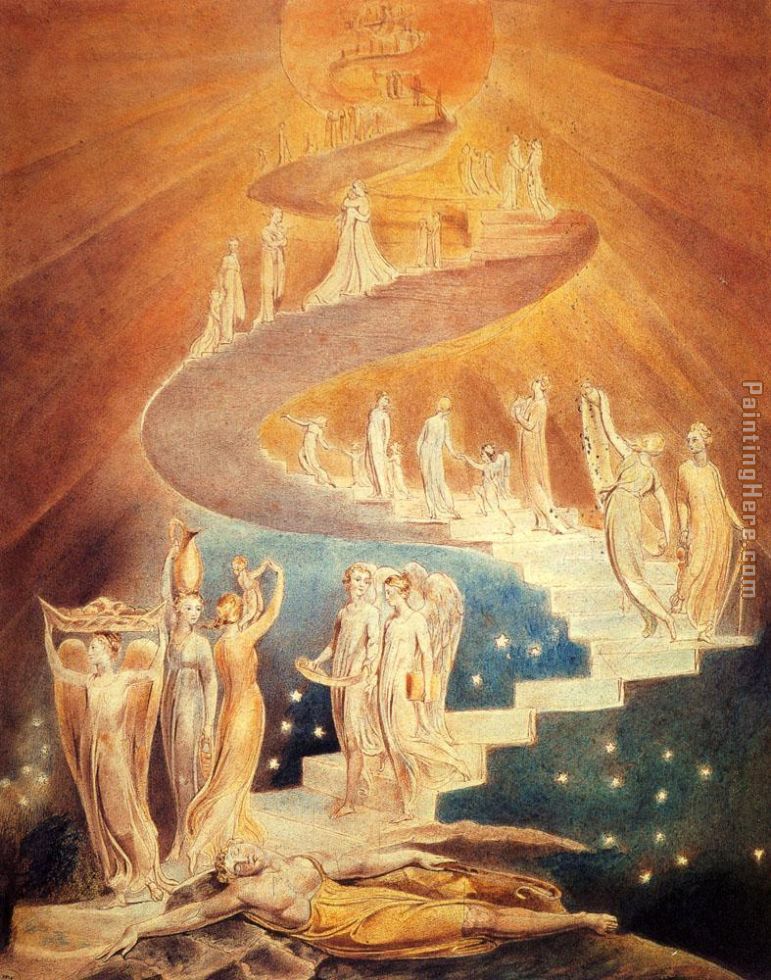
My buckled knees gave out beneath me and I crashed onto the pleather bench seat of the metro car. This car was packed with hungry lunch-time travelers daring to venture out into the summer swelter and piling into a burning metal-wagon with no ventilation. The windows of metro cars in Kiev must be welded shut; it's seldom a crack is made to allow some relief from the sauna steaming inside. Ukrainians seem hypersensitive to breezes that come into a speeding train. They would rather not risk becoming sick; they would rather die.
At the next station, sticking to the seat where I am reclined, I watched a Babushka board the train carrying two cumbersome bags filled with only-God-knows-what. Their whole lives must be packed in those bags. These elderly women always put on display such a pitiful show of how frail and weak they are. But God help anyone who would try to help them carry those bags. Acting as if she is so fragile that she will crumble to dust if she cannot have a moment to rest her aged, aching bones on the seat where my skin has fused together with the pleather. Well, if it is truly so difficult for them, then why are they always carrying around two monstrously full bags? Perhaps they would feel less wear and tear on their bodies if they learned to take it easy.
* * * * * * * * * *
As I have said before, Babushkas are a different kind of specimen. They live in a society and world of their own. If I had been able to start my dream franchise in NFL Europa, the Ukraine Purple-Haired Babushkas would have been a force not to reckon with. I would have signed several Babushkas to my offensive line and, undoubtedly, the fullback position. Generally speaking, Babushka are not built for acceleration, but, when they reach their top gear, it is hard to slow them down. The sheer force and wrath of Babushkas are not recognized until one comes into contact with such creatures. Even then, the incomprehensibility of these stocky, cubic compressions of iron have proven to be a doomsday for many young children, and innumerable rugged men. Of course there are disadvantages to establishing a professional sports team comprised namely of senior citizen women. But the fact that these geriatrics play ruthlessly by no rules, cancels out the fact that they need to rest several minutes after each down. Their tenacity makes up for their weathered physical conditions. It is not always about bringing the pain to your opponent. It is about intimidation—its mind games.
Babushkas are short and thick. It is uncommon to find them without their signature heavy bags. These bags are the source of their power. To take the bags away is like shaving Samson's head, like taking spinach away from Popeye, like handling kryptonite around Superman. Simply slap helmets on them (not because they need it, but because it is required in the rule book to play the game), hand them two bulky bags and pitch the ball to your star running-back—the gold-grill wearing Nastya Nikolayevna. Babushkas' skin thickens to the density of a rhinoceros' as their eyes focus in on obstacles appearing in their way. They snort and snarl apocalyptic fires from their brimstone nostrils while deflecting people left and right. What would happen when the unstoppable force meets the immovable object? You mean, what happened? Their explosiveness gave birth to a hybrid between the unstoppable force and the immovable object—the Babushka. A new star is born when two worlds collide. And when Babushka's course is plotted out, nothing shall deny her as she trounces the defence for a 99-yard touchdown. Finally, after clearing out everyone in her path, leaving broken bodies wasted and injured, strewn all over the field, she rumbles over to the bench and stands in front of the kicker to intimidate him into standing up and forfeiting his seat as well as his manhood. Babushkas are like wolves: traveling in packs seeking out the weakest of a herd to prey on their misunderstandings and feast on their timidness.

* * * * * * * * * *
Despite having just sat down, overwhelmed by my lack of sleep from teaching until 9:30 every night and waking up in the early-morning to teach more, I stood up for her to sit down on my perspired outline that sizzled and popped in the sun. I did not want to stand up, but it was determined for me when she stepped on the metro seeking out the nerveless person to parade her theatrics in front of. While I sit she yells at me about my lack of respect for elders and my laziness and how I am bringing shame upon my entire gender (not knowing that I am an American and seldom understand her insulting squawks); when I stand she praises and thanks me saying that chivalry and respect still triumph in this backwards world. I suppose that I can stand a little longer and cling to the rails for support. My transfer station is only a few minutes away.
As we pull into Arsenalna, the lights flicker on and off to alert people's attention. An announcement plays overhead about which station we will be arriving to. Even the monitors in the car display the location name and a small picture of the cannon that is situated near the street entrance to the station. Square dancing around each other, people jostle on and off of the tightly compressed train ushering in more fragrances, more moisture, and more attitude. Overhead there plays another announcement about our soon departure from the Arsenalna station, warning passengers to stand clear of the doors. Without warning, awakening from her hibernation, this bully Babushka, who bounced me from my seat, realizes that we will soon vamoose from her station. She nimbly springs to her feet, grabbing both bags as she starts hastily pumping her legs in cartoon-fashion in mid-air before landing on the ground to start bulldozing through the crowd. She shall not be denied. Thirty people are still flooding into the car as she rams her shoulder unexpectedly into the small of my back and hurls me forward against the current. Suddenly, I am transformed into her human shield slamming against each person between the Babushka and the door, my face slapping against the exposed chests of perspiring, hairy men until I am launched into the refreshingly cool marble walls of Kiev's deepest metro station. Oh, the unrequited prices we pay for our generosity!
Brushing away the birds flying around my head, I leap to my feet scrambling to the metro car. The doors close. The train pulls away. Here I stand at the wrong station, as that crotchety wild boar bumbles to the escalator, wiping everyone's sweat from my face and wringing out my clothes.
05 May 2011
Discourse Markers
Examining the
Usage of Discourse Markers in Ukrainian Students Speaking English at the
University of Minnesota
Introduction
The process of learning a language
(whether it is a native or a foreign language) takes a lifetime to master. The
path to mastering a language is filled discourse markers. My research includes
two respondents (Lera and Pavlo) answering questions in an interview setting as
well as observing natural conversations they have with each other and myself.
Both respondents in this article learned Russian and Ukrainian as their first
and second languages before learning English. Inspired by the work of Lakoff
and Holmes, this work is meant to evaluate the manner in which men's and
women's speech differ. The purpose is to
accurately evaluate their usage of discourse markers, such as um/uh.
Methodology/Data Collection
The respondents that were chosen for
this study share several similarities. Lera and Pavlo are citizens of Ukraine.
Pavlo comes from L'viv, which is located in western Ukraine near the border
with Poland. Lera comes from Crimea, which is the autonomous republic in
southern Ukraine, via Kiev (the country's capitol city). Both respondents are
22-years-old, and in their first year of studying at the University of
Minnesota. They speak Russian, Ukrainian and English fluently. Each respondent
comes from a middle-class family in major cities, thus allowing them to each
begin learning English in elementary school. Feeling a need to improve their
English communication skills, they both attended tutoring sessions and
discussion groups. The only variable is the respondents' sex—Lera is female and
Pavlo is male. I selected to study this group of respondents due to my
connection with Ukraine. I taught English in Ukraine for approximately two
years between January 2008 and August 2010. The many positive experiences that
I shared with Ukrainian people has motivated me to continue my interactions and
partnership with them.
My method of selection was
non-random sampling from a University of Minnesota student group named USSR
(Union of Students Speaking Russian). Lera and Pavlo were the only two
Ukrainians that I met during a Small World Coffee Hour event, where every other
week the USSR group (either in part or wholly) assemble. The implementation of
non-random sampling was instituted because there was not a large enough group
of Ukrainians to randomly select two respondents.
The nature of my data collection was
spoken data. I selected this type of data collection because I wanted to
examine their usage of discourse markers in speech. I had contemplated also
examining their writing styles, but deemed it of no significance because in
their writing they are taught to purposefully avoid discourse markers. If one
were to search for discourse markers in written data, it may be more difficult
to collect data in a perused, edited text. Thus, spoken data provides a more
informal, open medium to observe the usage of discourse markers. The majority
of the spoken data that I have collected has come from a formal, face-to-face
interview format. I implemented the interview format as a means of generating
data in English. Without the prompting questions in English, respondent would
gradually change what they were saying into Russian.
The first respondent that I sat down
with was Pavlo. We were at Ricardo's apartment with a small group having dinner
together. Several members of our group needed to leave to buy additional
products at the store. I was left in the living room of the apartment with both
of my respondents. I told them both that I was writing a paper about the life
of foreign exchange students at the University of Minnesota. It was a
requirement for me to ask a few questions to hear their general impressions.
Initially the idea was met with excitement. Then, Pavlo asked whether we could
do this in Russian. At this point, I had to insist it be in English considering
it was for an English class. When I took out my cell phone to record the
conversation, the atmosphere in the room seemed to change and Pavlo began to
look nervous. Throughout the interview, with myself and Lera in the room, he
avoided much eye contact and frequently was glancing at the phone to see how
much time had elapsed. Before the interview with Pavlo had concluded, and I
could switch my attention to Lera's response to the questions, we were
interrupted by the return of the other party members.
When I was able to sit down with
Lera, several days later, the setting was different. We were sitting in my
living room discussing her university back in Kiev. It seemed to be a perfect
time to discuss her impressions of her life and university in Minnesota. She
was drinking tea and working on her computer as I asked her questions.
Initially, while discussing Kiev, she was more relaxed. In a similar way with
Pavlo, when I took out my cell phone to record her responses, she became more
nervous in her responses. An interesting observation arose in the way which
each respondent handled the nervousness of having their third language
recorded. Pavlo's reaction to the nervousness he felt was to provide an answer
to the questions as quickly as possible. Lera's style starkly contrasts with
Pavlo's as Lera began to speak more slowly and carefully.
As aforementioned the linguistic
variable that I will be looking for is the usage of discourse markers, such as um/uh, which are pragmatic
variables. Other discourse markers that were used by the respondents were: like, well, yeah, kind
of, I don't know, actually, and anyways. Upon
listening to the original interviews and examining the recorded data and
transcription, it was remarkably noticeable how Pavlo used discourse markers (um, and uh) far more often than Lera. Whereas both respondents used the
word like on an equal scale. Although
um and uh are two different discourse markers, they appeared to
be interchangeable in their pragmatic function. The reason I chose to research
the usage of um/uh is because they seemed to be more noticeable
in the initial data collecting process.
Statistical
Analysis
Usage of um/uh
in total word count
|
|
Um/Uh
|
Word Count
|
Percentage
|
|
Lera
|
5
|
720
|
1 in 144
|
|
Pavlo
|
41
|
1119
|
1 in 27.29
|
Usage of um/uh
in time segments:
|
|
Um/Uh
|
Time
|
Percentage
|
|
Lera
|
5
|
8 minutes
|
Once every 96
seconds
|
|
Pavlo
|
41
|
7 minutes, 15
seconds
|
Once every
10.61 seconds
|
Pragmatic
Functions:
There are
five different features which I have identified in the usage of um/uh discourse
markers:
1.
Focusing
Focusing
is a technique which draws attention to a certain aspect of what the respondent
is trying to communicate.
|
|
Um/Uh
|
Total ~
Focusing
|
Frequency
|
|
Lera
|
5
|
3
|
60.00%
|
|
Pavlo
|
41
|
29
|
70.73%
|
Examples:
♠
“I'm studying because
I, um, transferred from the University in Ukraine – National University
of Kiev.” ~ Lera
♠
“In Russia and
Ukraine, it’s not – they don't give you enough, um, knowledge.” ~ Lera
♠ “So, when I finished high school, um, I had-I have
really cool friend, and she-so she started to study, um, English as her
major, like interpretation or translation.”
~ Pavlo
2.
Translating
Allowing
brief time to evaluate word choice as the respondent attempts to adhere to
local vernacular and regional word choices.
|
|
Um/Uh
|
Total ~
Translating
|
Frequency
|
|
Lera
|
5
|
1
|
20.00%
|
|
Pavlo
|
41
|
8
|
19.51%
|
Examples:
♠
“It’s, um, it’s
difficult to receive any knowledge of language from the teacher.” ~
Lera
♠ “She was not eligible for applying for this scholarship
because she, uh, she was like a, uh, she was a senior.” ~ Pavlo
♠ “Um, when I – so as
you know – in Ukraine we learn English starting from the very first form and
then to the, um, uh, the eleventh grade—until, uh, we finish the high school.” ~
Pavlo
3.
Error
Correction
As
the respondent is speaking their sentence, there is a break, filled with um/uh,
that allows for the respondent to quickly evaluate their speech to make sure it
follows basic Standard American English grammatical forms.
|
|
Um/Uh
|
Total ~
Error Correction
|
Frequency
|
|
Lera
|
5
|
0
|
0.00%
|
|
Pavlo
|
41
|
2
|
4.88%
|
Examples:
♠ “My, um, mine scores were 96.” ~ Pavlo
♠ “Yeah, so, I do – I do, uh, I really do like
it.” ~ Pavlo
4.
Conjunctions
This
feature is shown to be a conjunction between two different clauses.
|
|
Um/Uh
|
Total ~
Focusing
|
Frequency
|
|
Lera
|
5
|
1
|
20.00%
|
|
Pavlo
|
41
|
0
|
0.00%
|
Example:
♠ “So, it wasn't too difficult to be away from my parents, um,
it can be difficult to be away from my culture, I guess.” ~ Lera
5.
Split
Infinitives
The
insertion of um/uh in between the two parts of an infinitive.
|
|
Um/Uh
|
Total ~ Focusing
|
Frequency
|
|
Lera
|
5
|
0
|
0.00%
|
|
Pavlo
|
41
|
2
|
4.88%
|
Examples:
♠ “Where they ask you questions … things that you wrote in
your essays and after this you got to do is to, um, pass TOEFL
test.” ~
Pavlo
♠ “It really inspired me to, um, start to improve my English.” ~
Pavlo
Interpretation
Looking
through the data it becomes striking how different the results of this research
are. It comes as no surprise, however, that the most common pragmatic function
is “focusing.” When analyzing this pragmatic function, each respondent uses
focusing to account for upwards of 60-70% of their total usage. Thus,
percentages show a similarity which is not reflected in the actual word count
ratio. Lera's total um/uh word count was only 5; whereas Pavlo's usage
was upwards of 800% higher, totaling 41 counts. When looking at the amount of
times Lera used um/uh as focusing (60%) in comparison to the amount of
times Pavlo used um/uh as a focusing function (70%), there is
statistically little variation. However, Pavlo's um/uh is far more
noticeable than Lera's. I defer that Pavlo's use of um/uh as a focusing
function is used because his rate of speech is much quicker than Lera's mindful
responses. In order to keep listeners focused on the hasty ideas that he is
trying to express, Pavlo utilizes um/uh as focusing expressions.
Along similar lines, when Pavlo is
speaking, he uses um/uh as a pragmatic function to translate more times
than Lera. Lera does it once which contributes to 20% of her um/uh
usage, where Pavlo uses this function 8 times for 19.51% of his total. Although
the percentages would indicate Lera uses this function more frequently,
transcripts actually shows Pavlo more frequently displays occurrences of using um/uh
in combination with 2-3 second pauses as a means to translate his thought.
Another feature of interest in my
research was that I had originally thought that um/uh would be used as a
means to correct errors in the grammatical structure of sentences. I found out
through transcribing the data that this hypothesis was erroneous. In fact, Lera
did not utilize this function at all, and Pavlo only used this function twice.
It was surprising to find that what I thought that I heard in normal
conversation seemed not to be there when I began to transcribe and analyze my
data. The same occurrence appeared with my “Split Infinitives” pragmatic
function. I expected to reveal more instances of split infinitive usages of um/uh.
Instead, I found that Lera did not utilize this function at all, and, again,
Pavlo only used it twice. Both the lack of findings for “Split Infinitives” and
“Error Correction” were a surprise to me, because I had expected to see their
occurrence on a more regular basis, considering each respondent may disregard
different grammatical structures when answering my inquiries.
Problems
with Research
One difficulty that presented itself
with my research was scheduling conflicts. Because of the busy atmosphere of
the end of this Spring semester, it became a challenge to meet with my
respondents for further conversations. Whenever I was able to see Lera, she was
with several other native Russian speakers which made it difficult to keep the
conversation freely flowing in English. Pavlo's internship, volunteering, and
studying kept him incessantly preoccupied with other duties. I was only able to
document one more recording with Pavlo, but we were again with other people.
Perhaps he was more relaxed with friends as we walked around campus discussing
architecture and the end of the school year, but one external factor that
caused havoc for my research was the wind. Most of the hour and a half of time
that I could record him in a relaxed atmosphere was rendered inadmissible
because the quality of the recording was greatly compromised by the strong
gusty winds into the recorder. Although, from hearing distinguishable clips,
his use of um/uh discourse markers appeared not to change much.
As for Lera, we have had several
other discussions, but none of them were recorded. However, I observed a
difference in her demeanor and speech. She was more relaxed and conversational
when the audio recorder was absent. This relaxation caused a more steady and
rapid verbal flow of her thoughts. Although data was not recorded, the increase
of the like, um/uh, yeah and okay discourse markers
was audibly noticeable. As for having Pavlo and Lera talk with each other, the
idea's first attempt rendered nonproductive. While discussing the topic of the
University of Minnesota and Lera's upcoming graduation, their language switched
to Russian. It has proved difficult to persuade them to speak only in English.
Another difficulty that I
encountered with my research, apart from time and availability of my
respondents, was eliminating one of my initial discourse markers—like. I
spent time and energy researching the discourse marker, only to discover that
the pragmatic functions were inaccurate and I was counting merely the amount of
times they used like. The problem with all of this was more so my own
misunderstandings of like as a discourse marker and like as
another part of speech. In the end, it proved to be a more inconclusive aspect
of my research because each of my respondents used the word like
equally. It made the findings of um/uh in their speech look more
remarkable.
Conclusion
I found that the data which I
collected and analyzed was quite contrary to my initial hypothesis. I expected
to find that Lera's and Pavlo's frequent discourse markers would point to Lera
adhering to Lakoff's findings, as well as the respondents would both use um/uh
as a means of correcting their grammatical errors when their thoughts were
spoken aloud. On the contrary, when discussing the usage of um/uh in the
speech of Lera, her usage was far less than Pavlo's. That is not to say,
however, that she uses fewer discourse markers than he does. My research only
proves that, in the studies that I have conducted about the um/uh discourse
markers used by Ukrainian students studying at the University of Minnesota,
Pavlo displayed a stronger disposition towards using these discourse markers.
My research also concludes that the focusing function was the most prominently
used, which means that um/uh are not a means to determine that my
respondents are unsure of their answers. In fact, this study shows that they
are rather aware of the intent of their discourse markers and the functions
that each carry.
In further analysis of this topic, I
would like to expand my focus of discourse markers to include more than just um/uh,
perhaps I would identify each discourse marker used by each respondent. Also,
if I continue to look at the differences in the usage of discourse markers
between each sex, it would be beneficial to expand the number of respondents in
order to collect a wider range of data. The small respondents pool caused my
data to be too specified, and unable to draw conclusions for more generalized
research. Also, if to continue researching the use of English spoken by
Ukrainians, I would like to consider code-switching. Much of the data I
collected included different variations of switching between English and
Russian.
v
Appendix
A:
Lera’s Transcript
Speakers: Lera and Interviewer (Brent)
Setting: Sitting on sofas in my living room talking about the
United States.
* * * * *
Interviewer: Tell me, how do you like the United States?
Lera: I do like the United States, even though there are some
things that I didn't like about the United States. But I think now it is
especially difficult for me to talk about because I'm really homesick. And,
because people are homesick, they tend to like less a foreign country, foreign
places or whatever. But there are a lot of things that I like about the United
States. Like things are clean and well organized and safe and maybe there are
more opportunities here than there are in my country.
Interviewer: Okay, so why are you studying in the United States?
Lera: I'm studying because I, um, transferred from the
University in Ukraine – National University of Kiev. And, um, I think at
some point at my university I didn't know what I was going to do. So, I decided
to get this experience abroad and maybe broaden my knowledge, broaden my perspectives.
I came to the United States. And …
Interviewer: Okay, so, how long have you been studying English?
Lera: I studied English, well, I started studying English when I
was in elementary school; which most of people in Ukraine start studying
English, well, I lived in Russia when I started studying English in my school,
in my elementary school. And usually in schools, like in Russia and Ukraine, it’s
not – they don't give you enough, um, knowledge. They expect you to know
a lot in language. So, it’s kind of – on one hand it’s difficult to keep up
with all – all exercises and all tasks – but, at the same time, its, um,
it’s difficult to receive any knowledge of language from the teacher. So, I
started studying, I had a private teacher for sometimes – she was, she was a
student. She wasn't like special sort of teacher or something. She was just a
student who learned English really well. And, yeah, but by the time I wa – I
graduated from high school, I hated English. I just hated it. So then when I
entered the University, I din – I, I started studying Spanish. But by, when when-when-when
it was third year in the university, I realized that I really need English. I
mean, any normal person that wants to achieve something in contemporary world
needs to know more than one language, so… So, I went to a private school to
study English. And that’s been, like, three years. So, I would say it’s been
three years of intensive English studying. And I had a lot – I had native
English speakers to talk to, which helped me a lot. I think that what really
help to learn language.
Interviewer: Yeah. So, what's the most difficult part of studying here?
Lera: Well, being away from home is kind of difficult. But I, I
don't know, I moved out of my parent's house when I started university in Kiev.
So, it wasn't too difficult to be away from my parents, um, but it can
be difficult to be away from my culture, I guess. But actually, I thought it
would be much more difficult to study here. Like, I-I was worried if my
language is good enough to read texts in English, to write papers in English,
to understand teachers, everything. Then I realized that it’s not that
difficult, and teachers are helpful, and language they use is not that
difficult. I think that in-in-in, like, Ukrainian universities teachers use
more, like, sophisticated, scientific language, like they always – it’s like
they always want to confuse you. Here its more, like, clear, simple and there
wasn't too difficult to understand. But, anyways… I mean its still – I read
slower than I do in Russian and Ukrainian. But, its fine.
Interviewer: Yeah. Have you been able to meet a lot of people from
Ukraine, or Russia, or parts of Eastern Europe?
Lera: Yeah. Yeah, there are a lot of people from Eastern Europe
here, from what I noticed. And I became a–
good friends, friends with some people from, from Eastern Europe – from
Russia and Ukraine Belarus. And, and I think it’s—it’s kind of interesting, I
think sometimes—sometimes I think that we wouldn't be friends if we met in
Ukraine with these people, but here, just because we are—I guess we're all
homesick and we kinda just become friends. So, I don't know. And, yeah,
sometimes I hear—I hear Russian just on the streets of Minneapolis, other
places here, and it’s kind of interesting. It’s always, like, surprising me
but, at the same time, I don't know, I know there are a lot of immigrants.
** (END 8:03) **
v
Appendix
B:
Pavlo’s Transcript
Speakers: Pavlo, Lera, and Interviewer (Brent)
Setting: Sitting on sofas in Ricardo's apartment.
* * *
Interviewer: “Yeah, it can be anonymous. Completely anonymous.
Alright?”
Pavlo: “Okey.”
Interviewer: “I don't know how well this sound works, so we'll just set
it there and see how it works. Anyway, so, tell us: how do you like the United
States?”
Pavlo: “Um, I do like the Uni – United States of Amarica,
because, uh, I think that thee Ukrainians have, uh, reellee like
lot o' thing to learn from Amaricans and from Amaric – from the experience of
Amaricans. Yeah, so, I do – I do, uh, I really do like it. However,
there are a quite a few things that I don' really like about Amaricans, but
… Oh, I mean, uh, I don' like
about Amarican lifestyle, not about Amaricans. Uh, mmm, okey, but in
general, I'm really happy to be here, uh, uh, really happy that I
got this chance to come here, this scholarship, and to experience this kin'a
Amarican life, and take some more positive experiences with me. Okey, next
question.
Interviewer: A'right, well that's pretty cool.
(Laughter)
Lera: Like TOEFL
(Laughter)
Interviewer:
Don' worry about tha' …
Lera: Yeah, forty seconds of, like, ahhhhh!
(Laughter)
Interviewer: Okay, so, how did you end up getting this scholarship to
bring you here?
Pavlo: So, um, mine friend – One day, I guess it was
somewhere in September…um…year ago, my friend, uh, sent me a link
wia Vkontakte and she sow this kin'a advertisement of this scholarship, but she
was not elligible for applying for this scholarship because she, uh, she
was like a, uh, she was a senior.
Interviewer: Okay
Pavlo: This scholarship 's only for ju… , uh, freshmens, um,
Suphmores? Suphmores and Juniyers. And, in order to apply you got to create on
de website des, uh, of IREKS. IREKS is a kin'a, its a, administAtor of
des scholarship.
Interviewer: Kay.
Pavlo: Um, you gotta create an account, you gotta pos'
your scores that you get your school carrently – at your carrent school. You
got te post, eh, lotza, your, um, working spericence, your volunteering
experience, your, um, mmm, culture experience, li… alloatza zat stuff.
And, especially de, I sink de emphasis is on da volunteering experience because
Amaricans reellee – are reelly into volunteering.
Interviewer: Yeah…
Pavlo: Okay, besides that you have to write this three esseys,
essays, each of them for one tousand words, and, wa, de firs one is a why would
yo like to study in the USA. The second one is your idea of a leadership and
who's a good leader and why and it could be any one – like a member of
your family or the president of some, some country, any country or etcetra.
Okey. And the third one is the letter to your roommate, your future roommate.
Of course, your roommate don't gonna get it. If you, if you get de scholarship.
But, its jus' zat, yeah, where yer writing about yeorself, yeor life, yeor
family, yeor town. Okey. So, den, eef you are lucky, de call you and de say
that you, you are semI-finalist. If you're not lucky dey just sent you a
letter, send you a letter and say, “Oh, thank you very much for applying. But,
unfortunately, I mean, we liked your esseys very much and you, but …
(inaudible) …” Okay, and if you become a semifinalist, semi-finalist you go to
Kiev for intERview with the five Amaricans – four Amaricans, one Ukrainian
alumNI of this same scholarship – and were they ask you questions which are pretty much about your, um,
essays and things that you wrote in your essays and after this you got to do is
to, um, pass TOEFL test.
Interviewer: Oh...
Pavlo: And there is no minimum. I mean, you just have to pass the
TOEFL test, and then-then they'll, I mean, if y-they like you—if they like
everything else about you, but your TOEFL test is pretty low, they—I think
they're take you. Um, I mean, but not a really low, but, like, 60 out of
120 or something. Okay. My, um, mine scores were 96.
Interviewer: 96?
Pavlo: Yeah. I mean, I was, like, really? I-I thought, like,
70. Like, 70-80 – something like this. I was, “Wha? What?” At, like,
the first fifteen minutes, I thought that somethings wrong. I mean, maybe it’s
not the right score. Maybe it’s not the same scale. I don't know. Okay. Okay.
So, yeah, that's how I got here. Okay.
Interviewer: That's
great. Where did you learn your English?
Pavlo: Um, when
I – so as you know – in Ukraine we learn English starting from the very first
form and then to the, um, uh, the eleventh grade—until, uh,
we finish the high school. But when I finished the high school, I couldn't
barely speak the word; I could barely say the word. Yeah, because we were…
Lera: Same here.
(laughter)
Pavlo: (Laughter). 'Cause we were not motivated at all; there was
no motivation. Yeah, we kinda, we liked it, but yeah. So, and the teachers
sometimes, I had some—teachers change, teachers change all the time. Some of
them were really good. But some of them, they-they could barely speak
themselves. I mean, they could, they know the—they knew the grammar and stuff,
but they had no practice. They never seen an Englishman or American in there
life. Like, yeah, okay. So, when I finished high school, um, I
had-I have really cool friend, and she-so she started to study, um,
English as her major, like interpretation or translation. I don't know
how you call it. Okay, and, um, she was coming to my house and to,
because I have-I had VHS. She needed to watch those movies for her (inaudible),
and I was watching with her. I cou-I could barely understand a thing, a word.
And really inspired me, it really inspired me to, um, start to improve
my English, and there was also a, in L'viv, there was also American, um,
American Methodist Church. Tha-tha was- that was there some organization. They
had, uh, every Thursday they had, uh, (inaudible), where they
had—it was kinda Bible studies. It was really fun. It was really for students,
and it was really fun. People were nice there. And I was, um, coming
where with my friends sometimes and there were so many Americans. And they
were, like, talking English when they were talking Bible or something
else, they were talking English, and at the very beginning I could also barely
understand something. That was another motivation for me to learn. So, what did
I do? I applied for some private school. Just some, get something like
what you were teaching, and it was pretty expensive. But, um, I applied
for it, and I was taking private courses for one year. Then I read three books,
or four, or five, I don't know, but they are pretty thick. And they were, like,
adapted literature. Simplified, they were simplified. And, um, I was
reading those books. I was watching quite a few movies. At the very beginning,
as usual, I could barely understand something, but then it was getting better
and better and better. And I was also, um, frequently going to that, um,
student center and there were lots of Americans. There I had, um, my
first experience in speaking English.
** (END 7:15) **
Subscribe to:
Posts (Atom)